


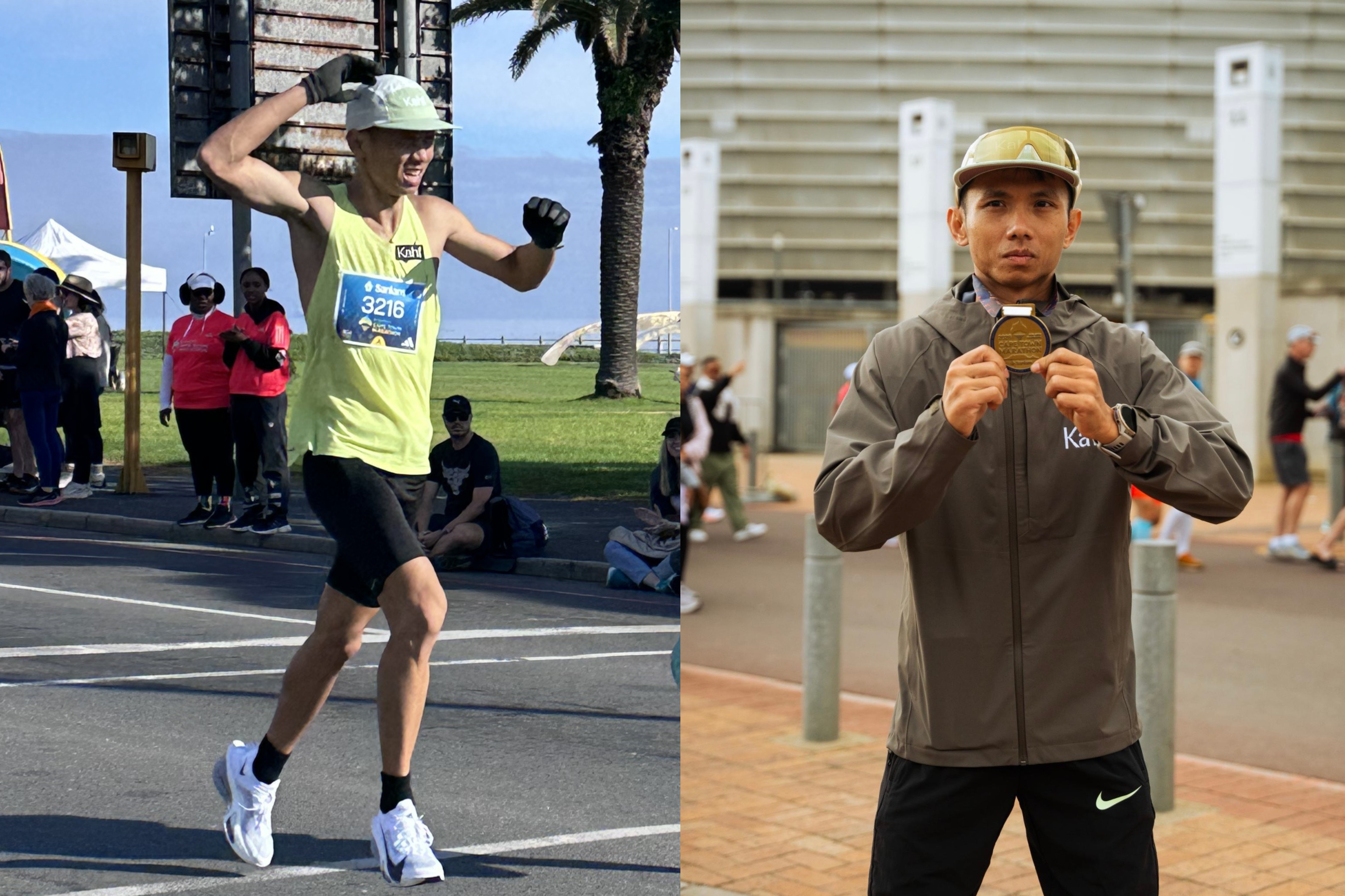
Some races are planned around personal bests. Some are built around expectations.
And then there are races like this one.
When Leo Tan boarded a flight to South Africa with Kahf Malaysia for the Cape Town Marathon 2026, he wasn’t chasing a record. He wasn’t arriving with the pressure of setting a new personal best.
After a long season and an off-season that followed the Osaka Marathon in February, the decision was simple.
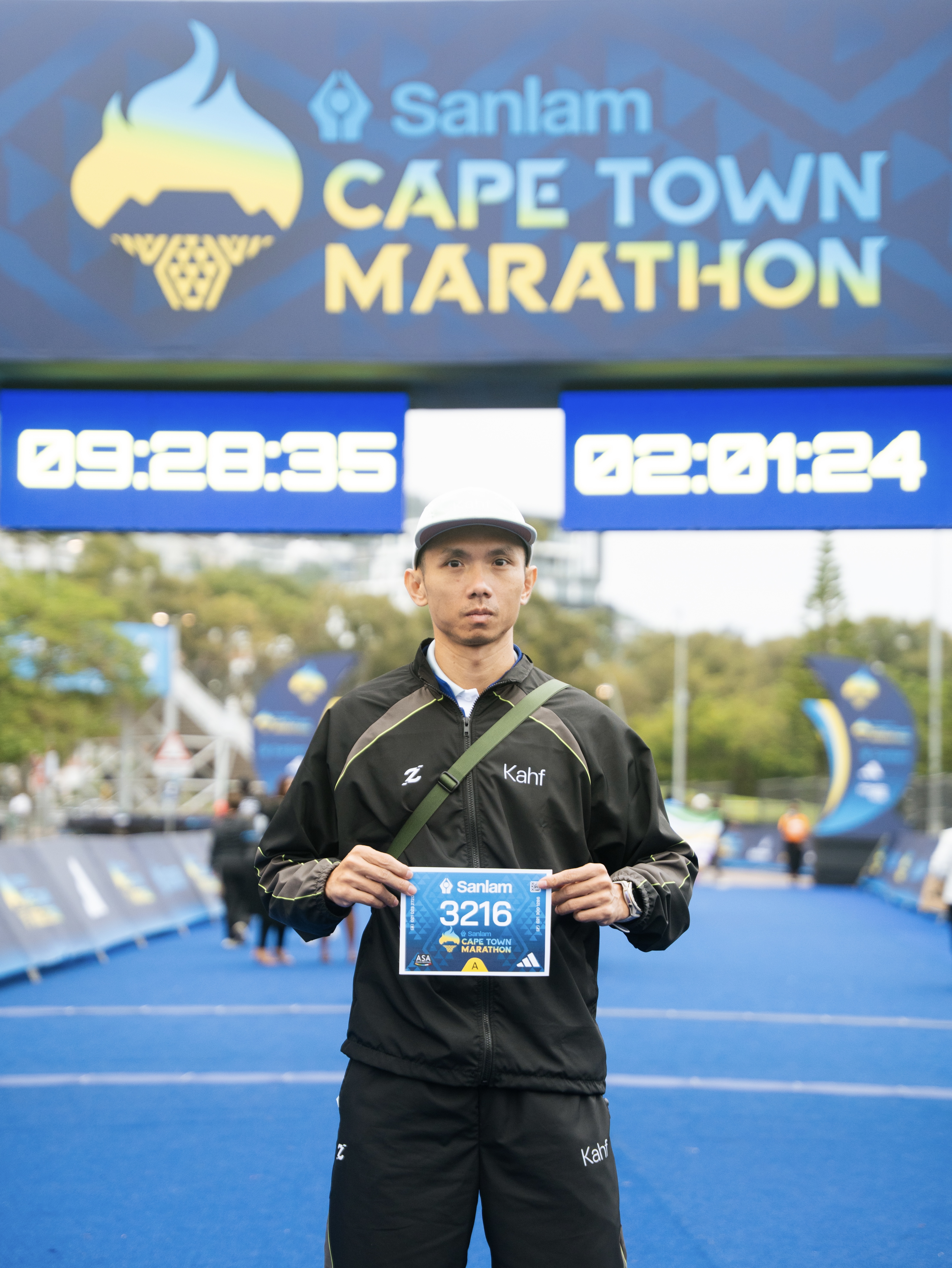
Why Cape Town?
“Just go do it.”
No grand strategy. No obsession with numbers. Just the desire to race in one of the world’s most iconic marathon destinations.
Still, athletes like Leo are wired differently.
Even when he told himself there were no expectations, there was a quiet target sitting in the back of his mind – 2 hours and 30 minutes.
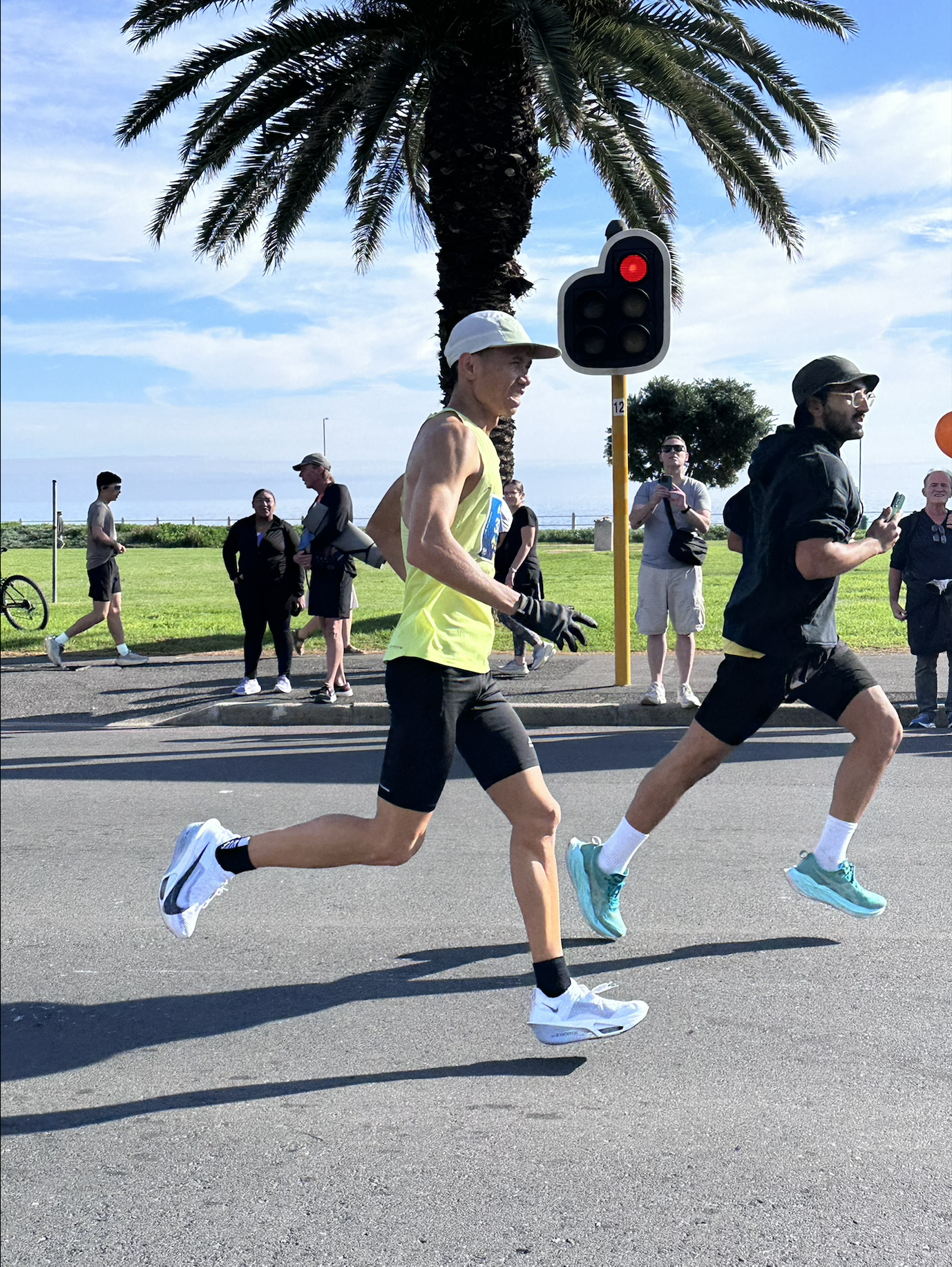
The challenge was obvious from the start.
Cape Town’s rolling hills were never going to be his favourite terrain. The course demanded patience, strength, and constant concentration. But the race presented another challenge that few people knew about.
Hydration.
Leo doesn’t drink Coca-Cola. He simply doesn’t enjoy it. While many marathoners grab whatever fluids are available late in races, he stuck to water throughout the day. No electrolytes. No backup plan. As a non-elite athlete in the race, he couldn’t place his own bottles along the course.
Five Salt Stick capsules. That was all he had.
Looking back, it wasn’t enough.
The aid stations weren’t always easy to spot either. Signage only appeared every five kilometres, forcing runners to stay alert while managing effort, nutrition, and pace over 42.195 kilometres.
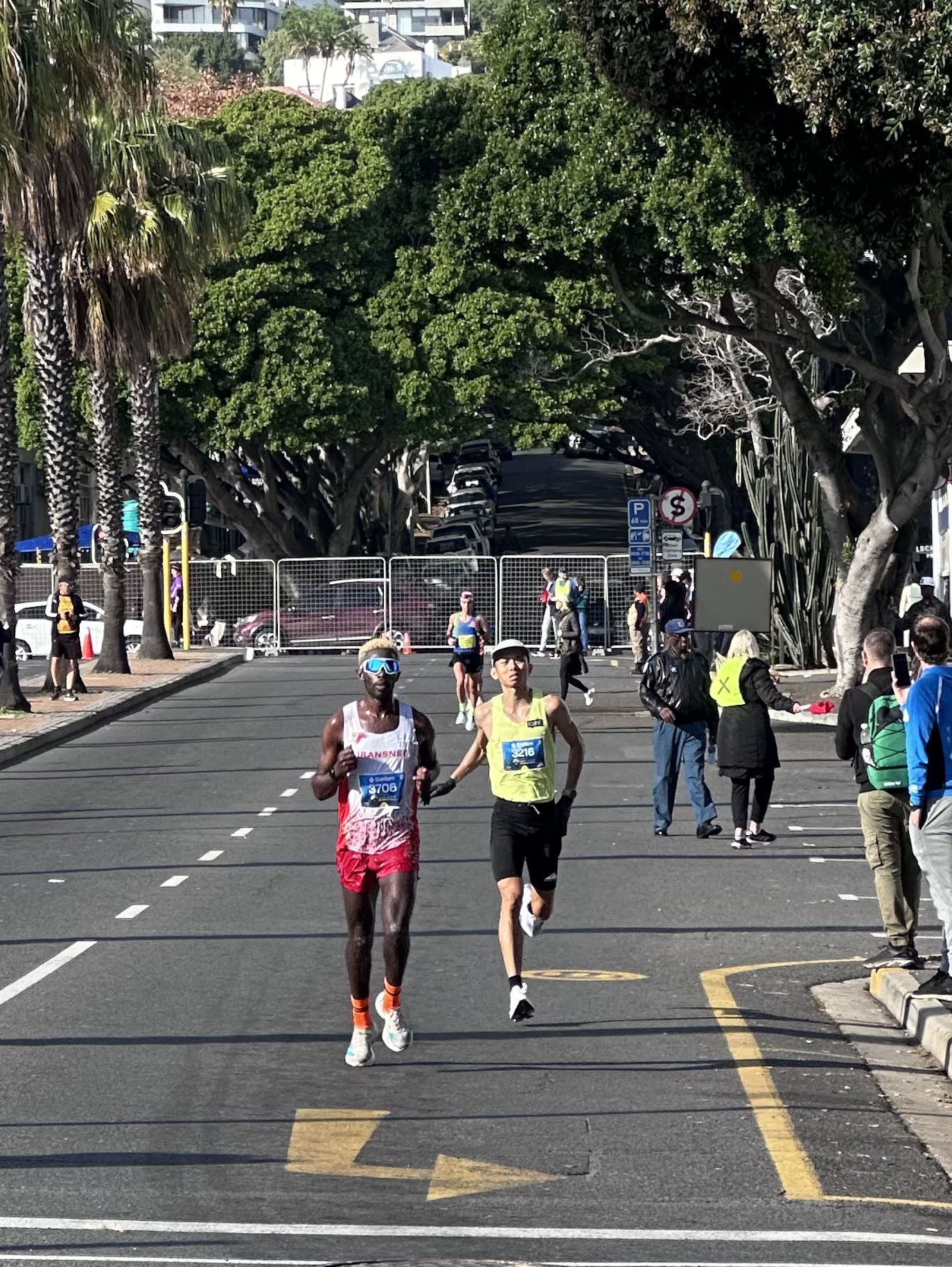
Yet through all of it, Leo kept moving.
The headwind that many runners talked about wasn’t the deciding factor. The hills weren’t either.
The real battle began with six kilometres remaining. The cramps arrived.
The body that had carried him across thousands of kilometres of training suddenly started negotiating with every stride.
This is where most marathon stories are won or lost.
Not in the opening kilometres.
Not at halfway.
But in those final moments when everything hurts and every reason to slow down begins to sound reasonable.
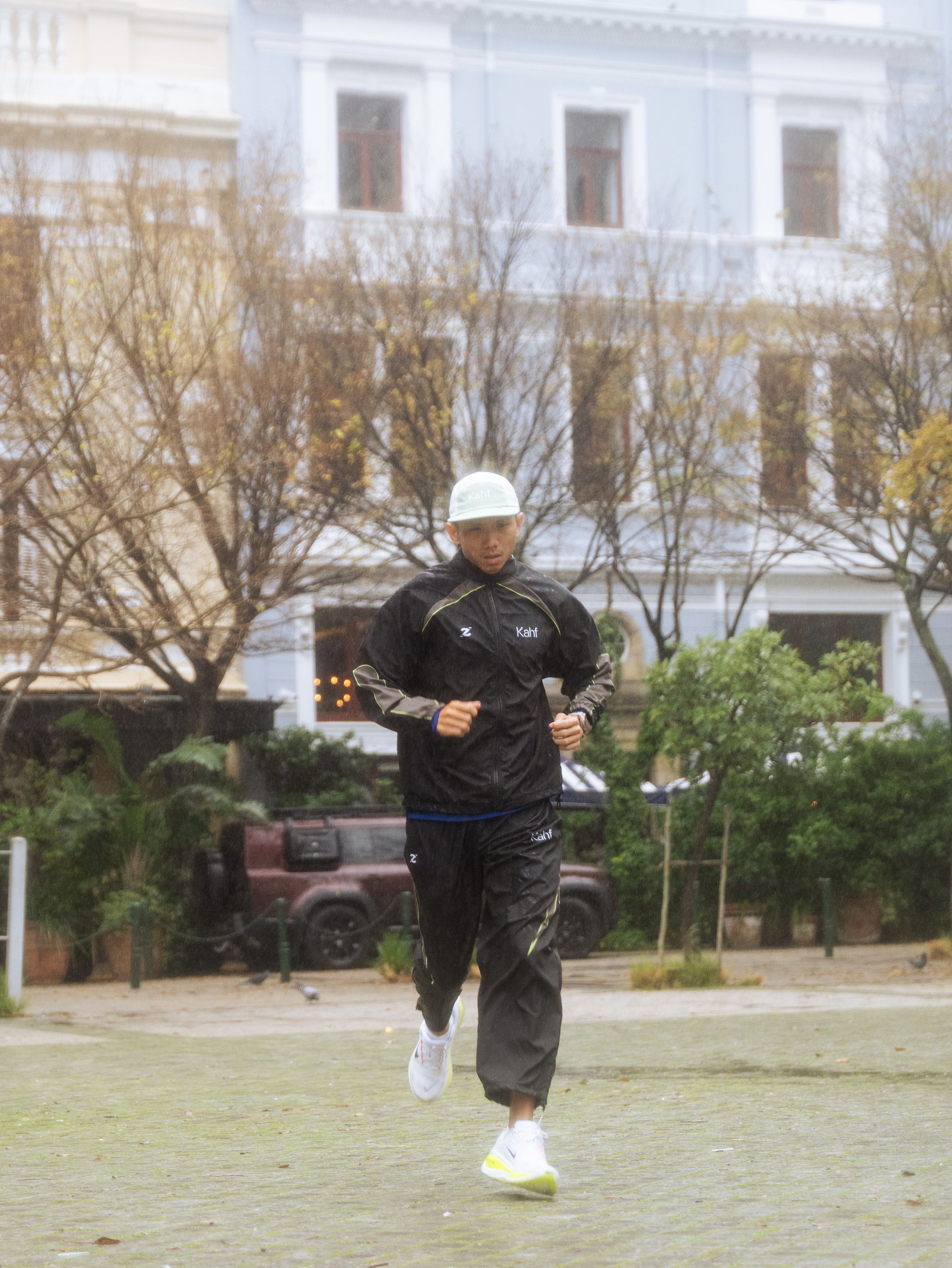
For Leo, there was one thought that kept repeating in his mind.
“I came all the way here. I might as well do well.”
It wasn’t about pride.
It wasn’t about ego.
It was about respect.
Respect for the training. Respect for the journey. Respect for the opportunity to stand on a marathon start line on the other side of the world.
Performance athletes understand this feeling.
They know that results are never guaranteed. Conditions can change. Plans can fail. Nutrition can go wrong. The body can cramp.
But effort remains a choice.
Kilometre after kilometre, Leo fought through the discomfort, refusing to let the race slip away.
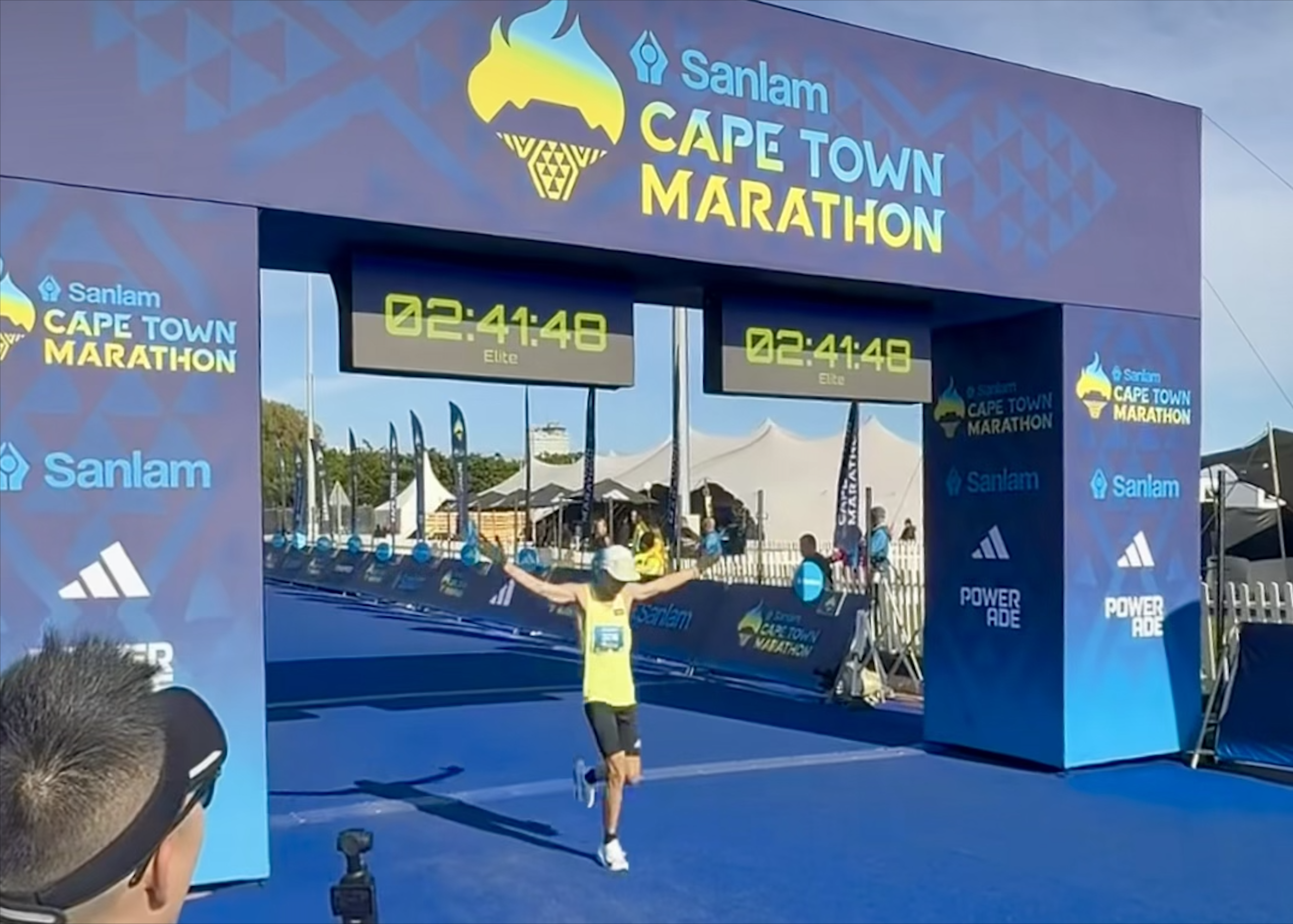
When he finally crossed the finish line, the clock read 2:31.
One minute away from his unofficial target.
Yet somehow, it felt like much more than a time.
Because Cape Town was never about chasing a personal best.
It became a reminder that great performances are not always measured by records.
Sometimes they are measured by resilience.
By adapting when things don’t go according to plan.
By finding a way forward when the body starts shutting down.
And by discovering that even on a day without perfect preparation, perfect nutrition, or perfect conditions, there is still something extraordinary waiting on the other side of the finish line.
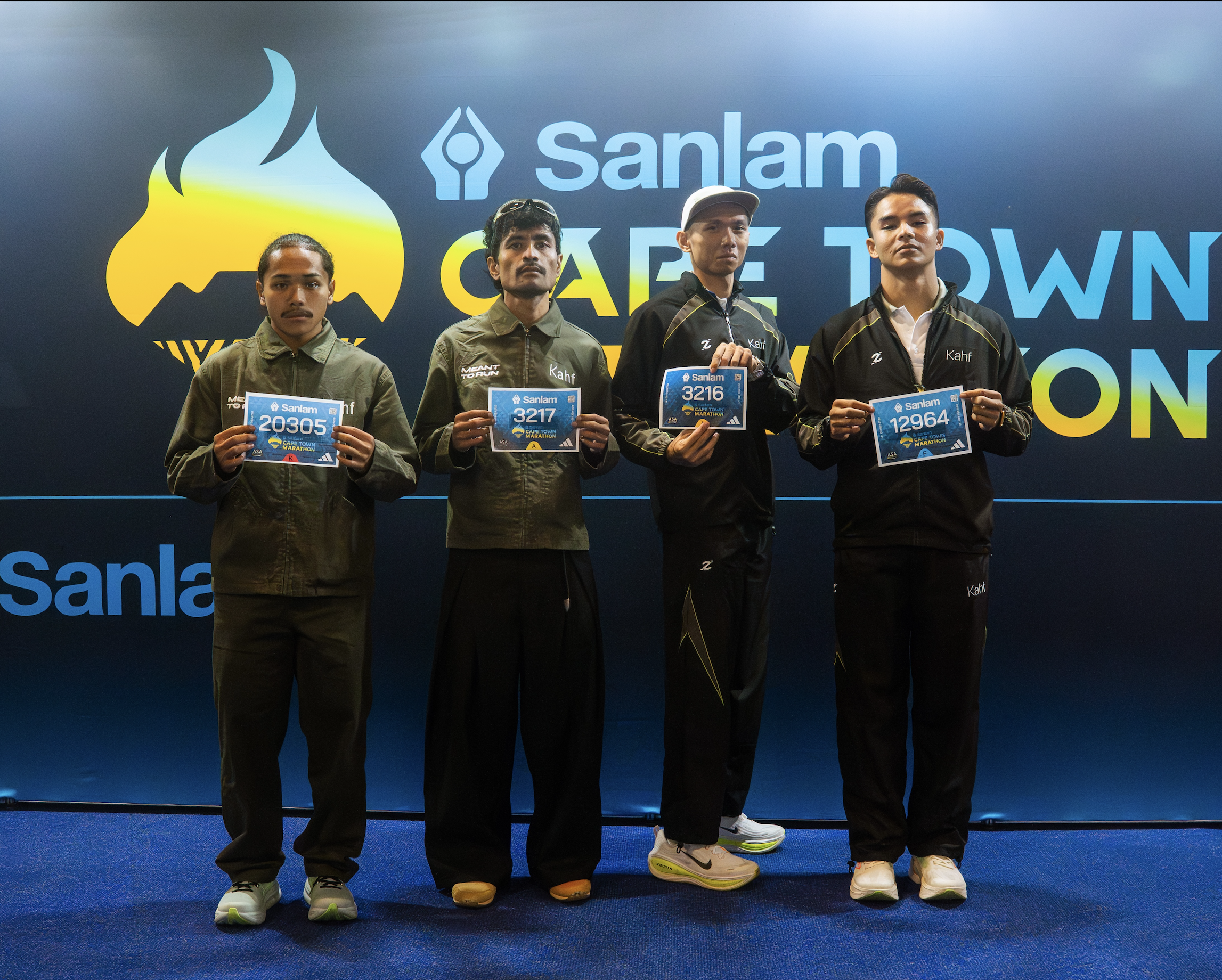
Leo Tan left Cape Town without a personal best.
But he left with something every athlete values just as much:
Proof that when things get hard, he can still compete.
Yet the memories he brought home were not measured solely by a finishing time.
Along the streets of Cape Town, Leo found something equally meaningful – friendship.
Sharing the journey with fellow Malaysians Haziq Hamzah, Johan Ghazali, and Zakuan Zainal, the marathon became more than just a race. It became an experience built on camaraderie, shared struggles, and unforgettable moments thousands of kilometres away from home.
Together, they navigated the challenges of the course, exchanged stories, supported one another, and created memories that will last far longer than any result on a timing sheet.
Leo may have arrived in Cape Town chasing a strong performance, but he left with something far richer – a 2:31 marathon, a deeper appreciation for resilience, and new friendships that made the journey truly worthwhile.
And sometimes, that’s the performance that matters most.


Comments are closed.